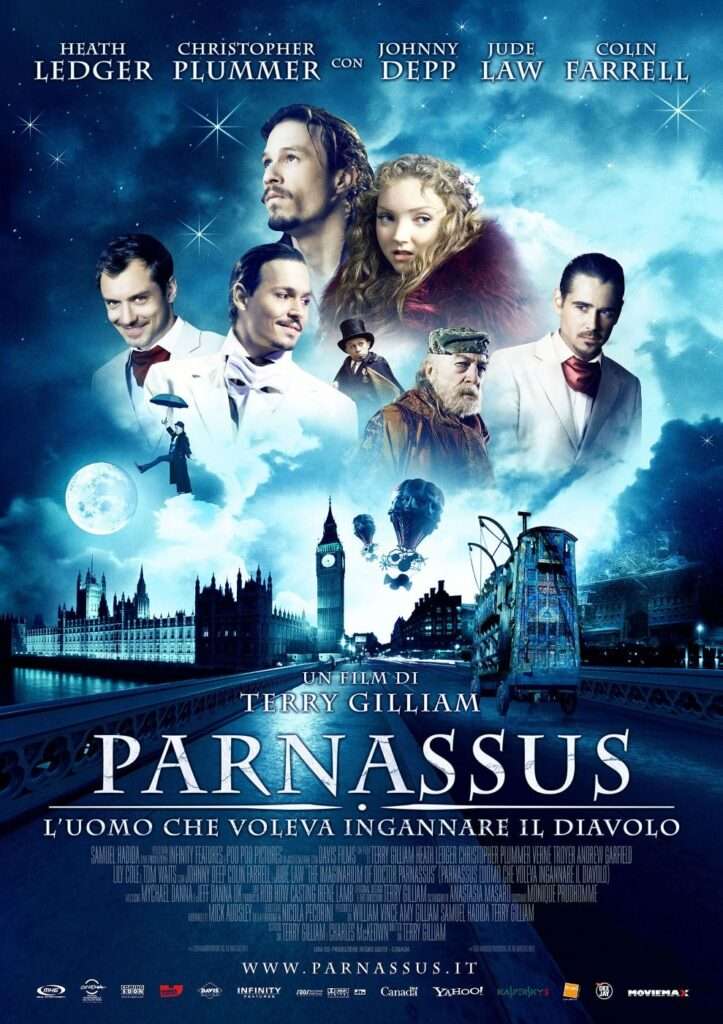
Some film locations simply tick the boxes on a script.
Others become characters in the story themselves.
When director Terry Gilliam was searching for a London location for The Imaginarium of Doctor Parnassus, he wanted somewhere that felt timeless, mysterious and slightly surreal—a place where fantasy could comfortably exist alongside reality.
Starring Heath Ledger, Christopher Plummer, Andrew Garfield, Lily Cole and Tom Waits, The Imaginarium of Doctor Parnassus remains one of Terry Gilliam’s most imaginative and visually distinctive films
He found exactly that in one of London’s oldest and most fascinating streets: Clerkenwell Close.
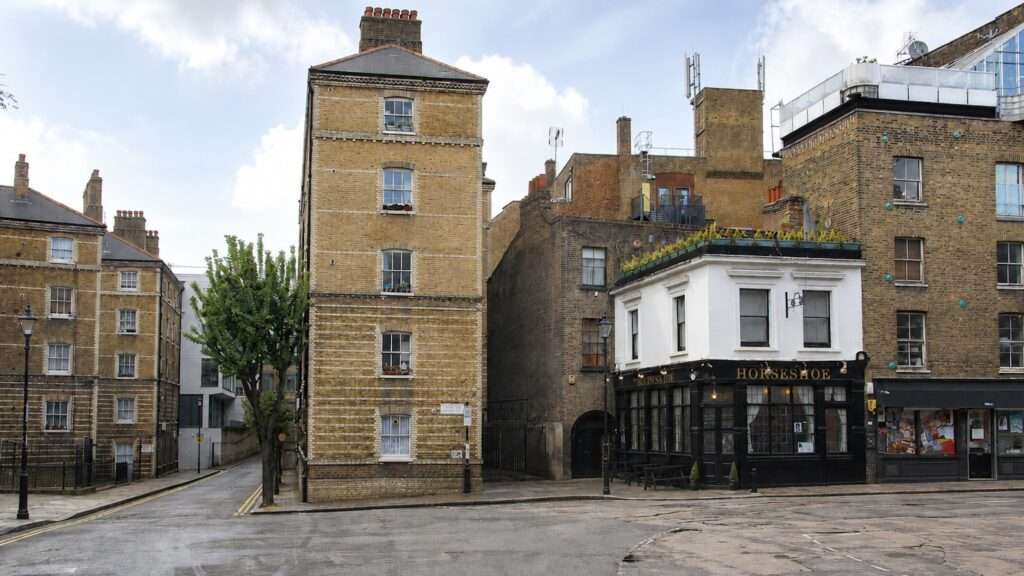
As Location Manager on the production, I had the privilege of helping transform this remarkable corner of London into the magical world of Doctor Parnassus, and nearly twenty years later it remains one of the most memorable productions of my career.
Discovering the Perfect Location
One of the things I’ve learnt after almost 30 years working in locations is that the very best locations already have a story to tell.
Clerkenwell Close certainly did.
Tucked away behind the modern streets of the City, it feels almost untouched by time. The street follows the line of an ancient Roman road and, if you know where to look, you can still see sections of the original Roman stonework where the modern tarmac has worn away over the centuries.
It’s a wonderful reminder that beneath today’s London lies another city entirely.
Combined with its wonderfully uneven buildings, centuries-old brickwork and slightly eccentric character, Clerkenwell Close possessed exactly the atmosphere Terry Gilliam was searching for. It didn’t need to be transformed into a fantasy world—it already felt like one.
That is the magic of finding the right location.
Why Locations Matter
One of the biggest misconceptions about filmmaking is that locations are simply somewhere to point the camera.
In reality, the right location can influence almost every creative decision.
The architecture affects the lighting.
The streets shape how scenes are blocked.
Textures, colours and history all become part of the finished image.
As Location Managers, our job is to find places that inspire directors, production designers and cinematographers before a single frame has been filmed.
Clerkenwell Close was one of those rare places where everyone immediately knew we’d found something special.
Transforming Clerkenwel
Once the location had been secured, months of preparation began.
Road closures had to be organised.
Residents and local businesses needed to be consulted.
Parking suspensions arranged.
Power supplies installed.
Large technical vehicles accommodated.
Like every location shoot, there were countless logistical challenges that audiences never see, but which make filming possible.
Then, almost overnight, the transformation began.
Lighting towers appeared.
Production vehicles lined the streets.
Extraordinary costumes emerged from wardrobe trucks.
Art Department dressed the location.
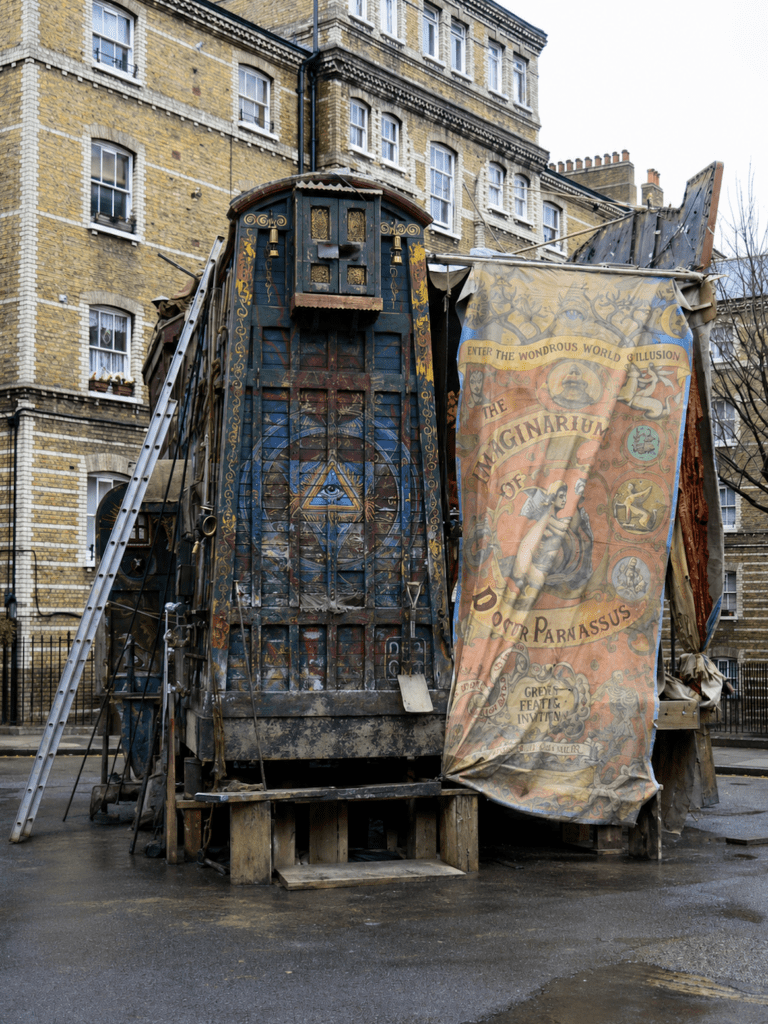
And Terry Gilliam’s remarkable travelling Imaginarium rolled into place.
The ordinary suddenly became extraordinary.
One of my favourite moments on any production is watching months of planning disappear into a living, breathing film set. For a few nights, Clerkenwell Close stopped being part of everyday London and became somewhere entirely different.
Working with Terry Gilliam
Terry Gilliam has one of the most distinctive visual imaginations in cinema.
Where most people saw an old London street, Terry saw an entire fantasy world.
Watching him work was fascinating.
He noticed details that many people would simply walk past. Every doorway, every brick wall and every unusual angle became another opportunity to create something visually magical.
As a Location Manager, those are the productions you particularly enjoy—when the location isn’t simply a backdrop but becomes an essential part of the storytelling.
Three Nights of Movie Magic
Like many location shoots, most of our work took place overnight.
Long hours.
Freezing temperatures.
Strict curfews.
Constantly racing the clock before daylight arrived.
Film crews become remarkably close during shoots like these.
Everyone shares the same objective, whether they’re moving lights, dressing sets, managing traffic or preparing actors for the next scene.
Despite the pressure, there was an enormous sense of creativity on set. Every department was working towards the same goal of bringing Terry Gilliam’s extraordinary vision to life.
Looking around Clerkenwell Close during those nights, it genuinely felt as though we were filming inside another world.
A Memory I’ll Never Forget

When the London filming finished, we wrapped the location exactly as we always do.
Signs came down.
Roads reopened.
The production moved on.
Like every crew member, I packed up and headed towards my next project.
One moment from those final nights has stayed with me ever since.
As everyone pushed through another long evening’s filming, Heath Ledger encouraged the crew with a simple shout:
“Come on guys, we’re making a movie here.”
It perfectly summed up the enthusiasm and commitment he brought to the production.
As we wrapped the UK shoot, Terry Gilliam removed his trademark cowboy hat, threw it onto the pavement in mock frustration after another long night’s work, and we all laughed before heading our separate ways. It felt like the end of another successful location shoot.
Three days later, I received a phone call that shocked the entire film industry.
Heath Ledger had passed away.
None of us could possibly have known that those would be my final memories of seeing him on set.
Looking back now, I don’t remember headlines or speculation.
I remember a dedicated actor who loved making films, encouraged those around him and gave everything to his work.
Looking Back
Every production leaves its mark.
Some are remembered for the spectacular locations.
Others for the people you meet.
And occasionally, both come together.
Whenever I walk back through Clerkenwell Close today, I still find myself looking down at those fragments of Roman road emerging through the tarmac and remembering those remarkable nights when one of London’s oldest streets briefly became the setting for one of cinema’s most imaginative films.
It’s a reminder of why I still love working in locations after all these years.
Sometimes, all it takes is finding the right street… and the story writes itself.