Behind the scenes of HBO’s House of the Dragon, exploring the extraordinary British landscapes that helped bring the world of Westeros to life.
Finding locations for a fantasy series like HBO’s House of the Dragon presents a rather unusual challenge.
Unlike a contemporary drama, where you’re generally looking for somewhere that already exists, you’re searching for landscapes and environments that can convincingly represent an entirely fictional world.
As Supervising Location Manager on House of the Dragon Season 2, I spent nine months leading the location department through an extensive period of pre-production, scouting and developing locations across Britain.
Working closely with Production Designer Jim Clay, the directors and the wider creative team, our search took us from dramatic coastlines and remote beaches to mountains, forests and enormous disused quarries.
North Wales proved particularly rewarding, offering some of the most extraordinary landscapes imaginable.
We weren’t simply looking for beautiful locations. They needed to feel like Westeros.
And, ideally, be somewhere we could actually get a film crew.
That second requirement can sometimes be considerably more challenging than the first.
Finding Westeros – The Location Scouting Process
One of the most fascinating aspects of working on House of the Dragon was the sheer variety of landscapes required.
Westeros is a world of contrasting environments, from the windswept shores of Dragonstone to the forests, mountains and river valleys of the mainland.
The challenge was finding real locations that could provide the foundations for those fictional settings.
North Wales offered an extraordinary range of possibilities within a relatively concentrated geographical area.
Anglesey provided wild beaches, rocky shorelines and coastal landscapes, while Snowdonia, now officially known as Eryri, offered vast mountain valleys, waterfalls and dramatic terrain.
The region’s disused slate and granite quarries also provided something quite different: imposing industrial landscapes that could be transformed through production design and visual effects.
Our search also extended into southern England, including the extensive woodland landscapes of Surrey.
But identifying a visually suitable location was only the beginning.
We also had to consider access, permissions, environmental restrictions, parking, unit bases and the considerable infrastructure required to support a major television production.
A remote beach might look perfect in a scouting photograph, but transporting hundreds of crew, equipment and vehicles to it is another matter entirely.
That’s where the real work begins.
House of the Dragon Season 2 Filming Locations
Several of the locations we explored during pre-production went on to feature in Season 2, helping establish the landscapes of Dragonstone and other parts of Westeros.
What makes these locations particularly interesting is how different they are from one another.
A sandy beach backed by pine trees, an enormous granite quarry, an exposed coastline, a spectacular mountain valley and a dense Surrey forest might not immediately seem connected.
But through production design, cinematography and visual effects, they can all become part of the same fictional world.
Here are five locations from our scouting work.
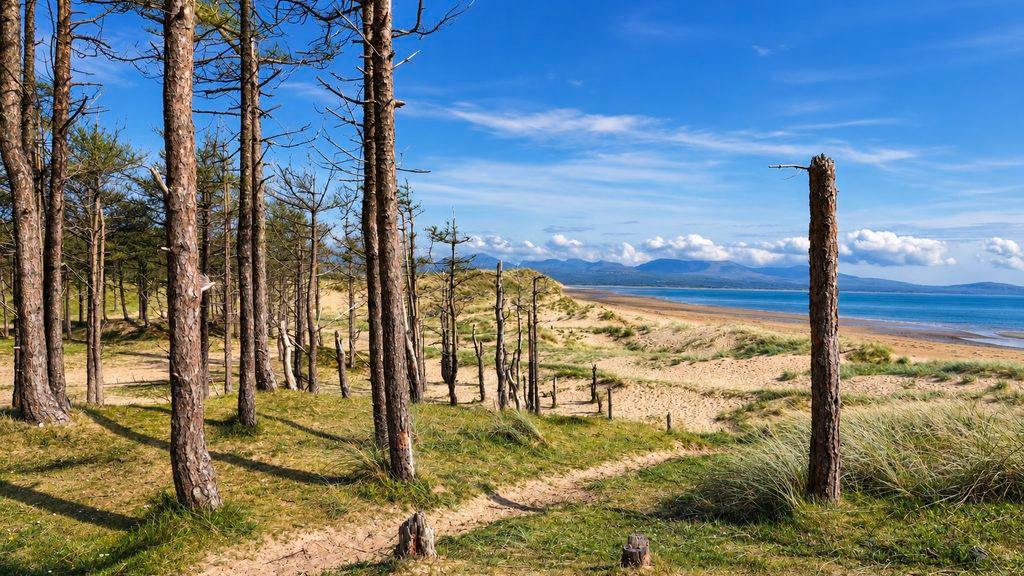
Llanddwyn Beach, Anglesey – The Shores of Dragonstone
One of the most striking coastal locations we explored was Traeth Llanddwyn Beach on Anglesey, near Newborough.
With its vast sandy shoreline, dunes, pine forest and distant mountain backdrop, Llanddwyn offered an extraordinary combination of landscapes.
It’s a location that feels wonderfully remote, despite being relatively accessible from the mainland.
The beach subsequently featured in Season 2 as part of the coastline of Dragonstone, including sequences involving Addam of Hull and Seasmoke, the dragon who eventually chooses him as his rider.
What makes Llanddwyn particularly interesting from a location-scouting perspective is the variety of environments within a relatively small area.
The pine forest provides an entirely different visual character from the exposed beach, while the dunes and surrounding coastline offer further possibilities.
Of course, working on a beach also presents its own practical challenges.
Tides, weather, access and environmental considerations all become important factors, particularly when filming in a protected natural landscape.
And the beautiful Welsh weather doesn’t always read the script.
Trefor Quarry, Gwynedd – Creating Dragonstone Castle
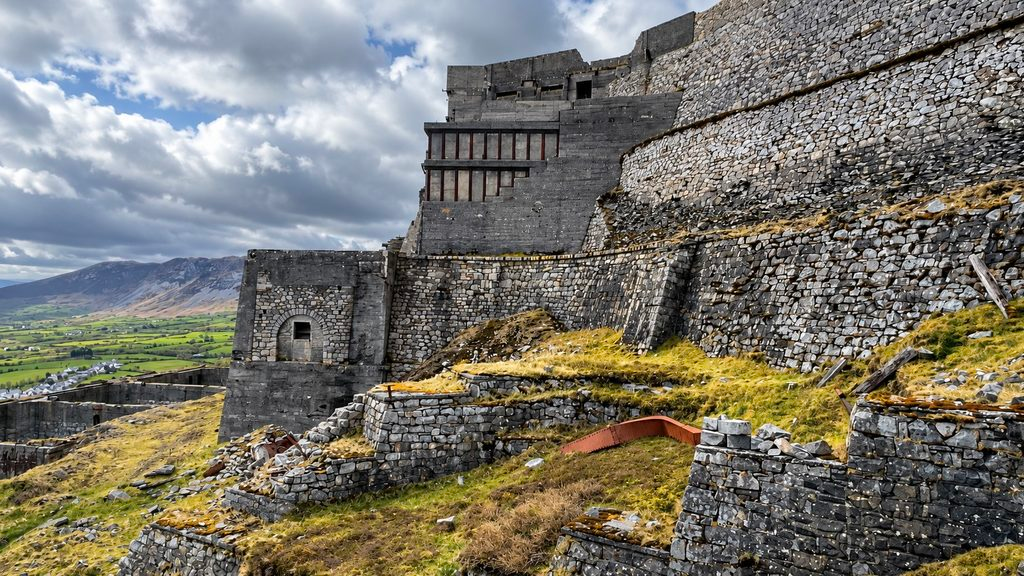
Perhaps one of the most extraordinary locations we found was Trefor Quarry, also known as Yr Eifl Granite Quarry, on the Llŷn Peninsula in North Wales.
The disused quarry sits high above the surrounding countryside, with imposing stone structures, sheer rock faces and dramatic views across the landscape.
It’s a remarkable place.
What made Trefor particularly interesting was that many of the enormous stone structures were already there, remnants of the quarry’s industrial past.
These imposing granite buildings and retaining walls had an almost fortress-like appearance, making them an ideal starting point for creating Dragonstone Castle, the ancestral seat of House Targaryen.
Rather than constructing an entirely new castle, we were able to use the existing quarry structures as the foundations of the location.
Additional elements were physically constructed by the art department, while other sections were extended and enhanced through visual effects.
The result was a combination of real industrial architecture, practical set construction and CGI, transforming a former Welsh granite quarry into one of the most recognisable locations in Westeros.
For me, this is one of the most fascinating aspects of location scouting.
Sometimes you find a location that already possesses much of what the production needs. The challenge is recognising its potential and understanding how it can be developed.
Of course, working in a remote quarry also presented considerable practical challenges, from access and safety to accommodating the infrastructure required for a major television production.
But visually, Trefor was an extraordinary find.
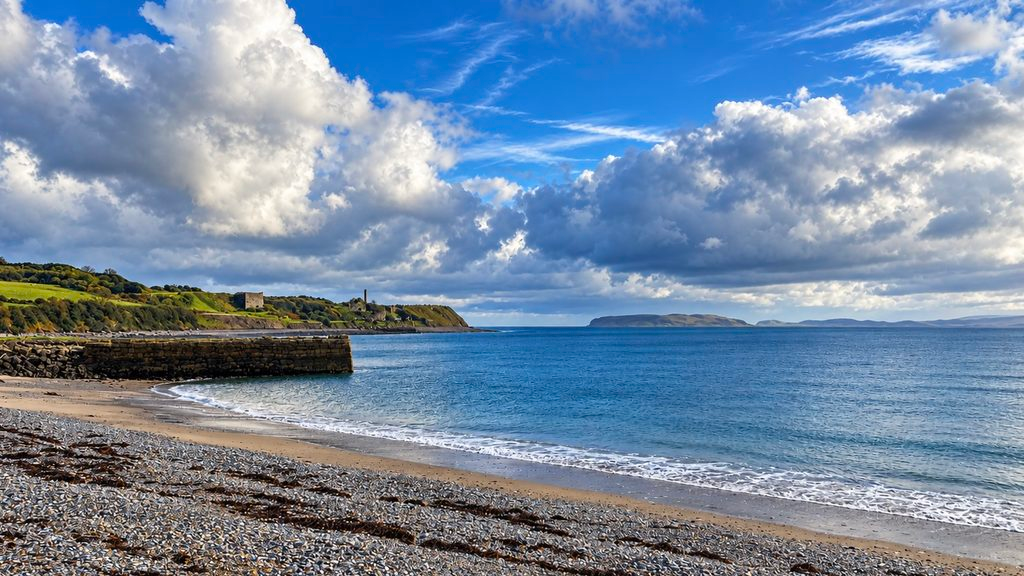
Penmon, Anglesey – The Coastal World of Westeros
Another location we explored was Penmon on the eastern coast of Anglesey.
The area offers a striking combination of exposed shoreline, rocky beaches and views across the surrounding coastline.
Penmon Point became one of the coastal filming areas used during Season 2, with sequences reportedly involving Corlys Velaryon, played by Steve Toussaint, and boats offshore.
My scouting photographs include the shoreline around Penmon Jetty, which offered a different coastal environment from the expansive sandy beaches elsewhere on Anglesey.
For a production like House of the Dragon, finding varied coastlines was particularly important.
Although the story takes place in a fictional world, its different regions need to feel distinct and geographically believable.
One stretch of coastline might represent an exposed approach to Dragonstone, while another could provide the setting for a harbour, landing or journey by sea.
The challenge was finding locations that offered the right atmosphere while remaining practical for filming.
And, as anyone who has worked on a coastal production will appreciate, tides and weather can quickly turn a straightforward filming plan into something considerably more complicated.
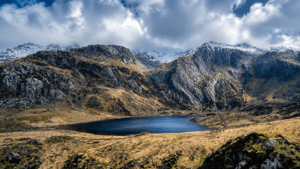
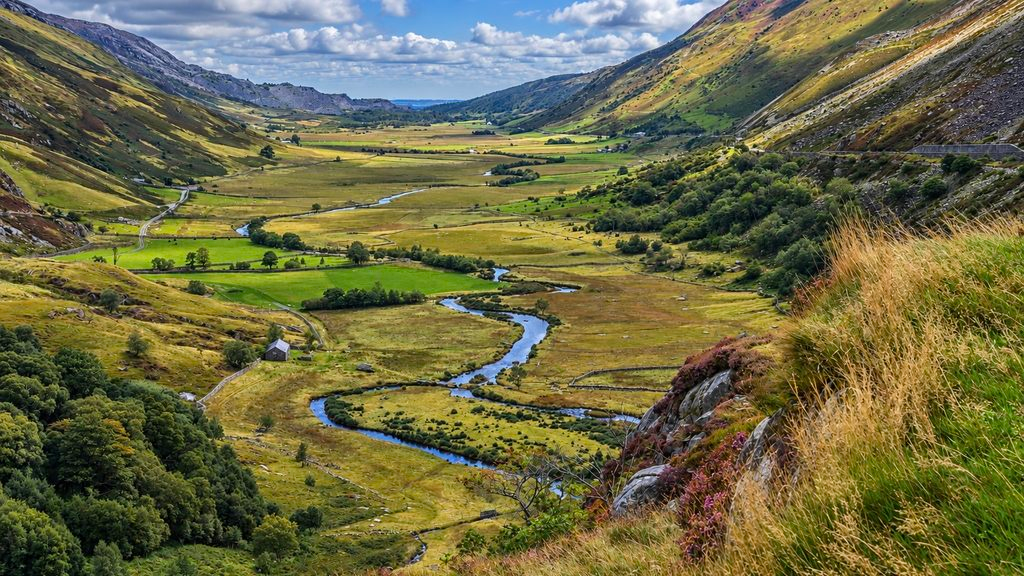
Ogwen Valley, Snowdonia – The Landscapes of Westeros
Moving inland, the landscapes of Ogwen Valley in Eryri National Park provided a completely different environment.
The valley is one of the most dramatic landscapes in North Wales, with steep mountain slopes, winding rivers and vast open views.
My scouting photographs from the area around Rhaeadr Ogwen show the extraordinary scale of the landscape.
It’s the sort of place that requires relatively little imagination to picture as part of Westeros.
The wider Ogwen Valley was used during Season 2 for scenes involving riders travelling through the landscape, with filming-location accounts associating the area with the Riverlands.
What made the area particularly appealing was its natural scale.
Unlike a forest or enclosed location, the valley provides enormous uninterrupted views, allowing characters to be placed within a landscape that feels both dramatic and remote.
However, finding the perfect camera angle is only one part of the equation.
Mountain locations bring their own logistical challenges, particularly when access roads, parking, weather and the movement of equipment all need to be considered.
A location might look spectacular from a hillside, but the question is always how to get the production there.
And then get everyone back again.
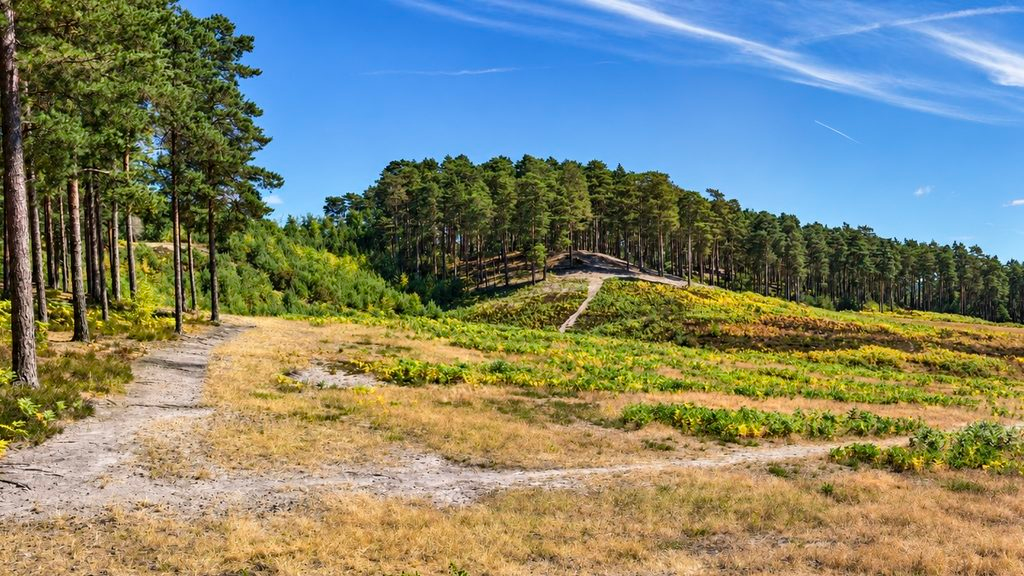
Bourne Woods, Surrey – The Forests of Westeros
While North Wales provided many of the dramatic coastal and mountainous landscapes for House of the Dragon Season 2, our location search also took us to Bourne Woods near Farnham in Surrey.
Bourne Woods is a remarkable filming location, with its towering pine trees, winding forest tracks and distinctive sandy terrain.
It’s also a location I’ve become very familiar with over the years, having worked there on other major productions, including Ridley Scott’s Napoleon.
For House of the Dragon, the woodland offered a very different environment from the exposed beaches, mountains and quarries of North Wales.
The dense forest, natural clearings and varied terrain provided opportunities to create the woodland landscapes of Westeros.
One of the great advantages of Bourne Woods is its versatility.
Different areas of the forest can provide completely different looks, while its long history of accommodating major productions makes it particularly attractive from a practical perspective.
Of course, finding the right woodland isn’t simply about the trees.
The direction of the light, the density of the forest, the terrain and the ability to accommodate the considerable equipment and infrastructure required for filming all play an important part.
For a fantasy production, it’s also essential that the landscape feels timeless, without too many obvious reminders of the modern world.
Bourne Woods offered that combination of atmosphere, scale and practicality.
From Welsh Quarries to the Castles of Westeros
One of the particularly interesting aspects of Season 2 was the use of North Wales’s former industrial landscapes.
The region’s quarries offered extraordinary opportunities for the production.
Trefor Quarry provided the foundations for Dragonstone Castle, while Dinorwig Quarry near Llanberis was used for the exterior of Harrenhal, the enormous and notoriously ruined castle in the Riverlands.
Both locations demonstrate how industrial landscapes can be repurposed for an entirely different visual world.
At Trefor, the original granite quarry structures were incorporated into the design, with practical additions and visual effects completing the transformation.
It’s a fascinating example of how an existing environment can provide much of the architectural character required for a fantasy production.
Where most people might see the remains of a quarry, a production designer might see the foundations of an ancient fortress.
And for a location manager, the challenge is finding those environments and understanding how they might work for the production.
It’s one of the most enjoyable aspects of location scouting.
Sometimes the most unlikely places provide the most extraordinary results.
The Challenges of Filming in North Wales
North Wales is undoubtedly one of the most visually spectacular regions in Britain, but working in remote landscapes presents some considerable challenges.
Many of the locations we explored were in environmentally sensitive areas, including protected coastlines, forests and national park landscapes.
Careful consideration had to be given to permissions, access, environmental protection and the impact of filming.
The weather was another important factor.
Conditions in the mountains and along the coast can change remarkably quickly, and a location that looks spectacular on a clear scouting day can become a very different proposition in heavy rain or strong winds.
Then there are the practical demands of the production itself.
A major HBO series involves substantial numbers of crew, technical equipment, vehicles and support facilities.
Even a relatively small scene can require a significant logistical operation.
The location department’s role is to bridge the gap between the creative ambition of the production and the practical realities of filming.
Finding the right landscape is only the beginning.
Making it work is where the real challenge lies.
Working with Production Designer Jim Clay
One of the most rewarding aspects of my time on House of the Dragon was working with Production Designer Jim Clay.
Jim’s approach to creating Westeros was rooted in making the world feel believable.
Although the series is a fantasy, the environments needed to have a sense of history, geography and authenticity.
The locations were an essential part of achieving that.
A landscape might be dramatically enhanced through visual effects, but the underlying geography, textures and natural features still provide an important foundation.
Working with Jim and the directors, the scouting process involved exploring a wide variety of environments and considering how they could be incorporated into the developing visual world of the series.
There were countless photographs, maps, location references and discussions along the way.
It’s a collaborative process, with the production designer, directors, location department and other creative teams all contributing to the development of the locations.
And occasionally, after driving for hours across the countryside, you arrive somewhere that immediately feels right.
Those are always good days.
From Location Scouting Photograph to Finished Scene
One of the reasons I enjoy sharing my original scouting photographs is that they show the locations before the transformation begins.
A beach is still a beach.
A quarry is still a quarry.
And a mountain valley is simply an extraordinary piece of Welsh countryside.
But once the production designer, art department, cinematographer and visual effects teams have finished their work, those same locations can become Dragonstone, Harrenhal or the landscapes of the Riverlands.
Looking at the original photographs alongside scenes from the finished series is a fascinating reminder of how much work goes into creating a believable fictional world.
Sometimes the transformation is dramatic.
On other occasions, the landscape itself does much of the work.
For a location scout, that’s one of the most satisfying aspects of the job: recognising the potential of somewhere long before it appears on screen.
Looking Back at House of the Dragon Season 2
Looking back at my nine months as Supervising Location Manager on House of the Dragon Season 2, what stands out is the extraordinary variety of locations we explored and developed during pre-production.
From the beaches and pine forests of Anglesey to the imposing granite quarries and mountain valleys of North Wales, and the woodlands of Surrey, the challenge was finding real landscapes capable of becoming part of an entirely fictional world.
Working alongside Production Designer Jim Clay, the directors and the wider creative team, we explored countless possibilities, gradually identifying and developing locations that would help establish the visual world of Westeros.
Some of those locations, including Trefor Quarry and Llanddwyn Beach, went on to become memorable settings in the finished series.
One of the most rewarding aspects of location management is seeing a place you first discovered during a scout transformed into something extraordinary on screen.
Sometimes that transformation involves extensive construction and visual effects. On other occasions, the natural landscape provides almost everything required.
And sometimes, as with Trefor Quarry, the remnants of an old Welsh granite quarry turn out to be the perfect foundations for a Targaryen castle.
For me, that’s the fascination of location scouting.
It’s about looking at a real place and imagining what it could become.
And on House of the Dragon, that meant finding pieces of Westeros hidden in the landscapes of Britain.