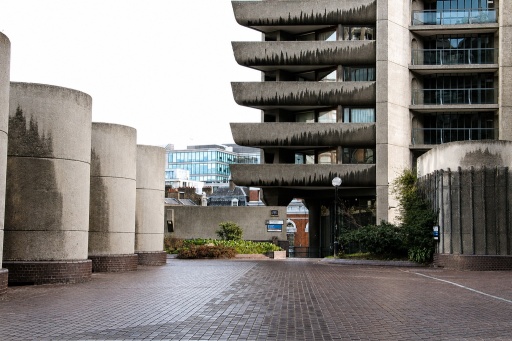
I love Brutalist architecture in London.
There, I’ve said it.
It’s ugly. Or at least, that’s what a lot of people will tell you. Huge slabs of concrete, hard edges, straight lines and buildings that can look as though they’ve been dropped into London from a slightly bleak vision of the future.
But I love it.
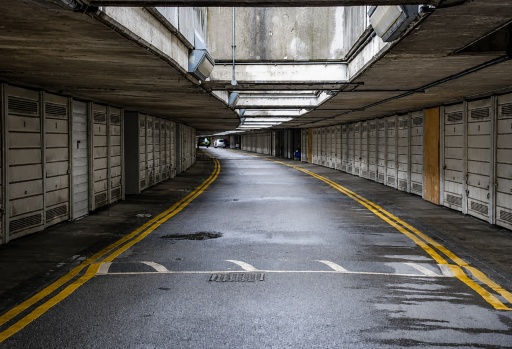
Maybe it’s the location manager in me, but there’s something about concrete. The lines. The repetition. The scale. The way light hits it. Brutalist buildings have a presence that very few other styles of architecture can match.
And for filming, they can be incredible.
Over the years I’ve scouted and worked around some of London’s best-known Brutalist buildings and filming locations. Ernő Goldfinger’s Trellick Tower and Balfron Tower. Neave Brown’s Alexandra Road Estate. The Brunswick Centre. The Barbican.
You don’t exactly walk past any of them without noticing.
Concrete, Straight Lines and No Apologies
I think that’s what I like about Brutalism.
It doesn’t apologise.
A Georgian terrace wants you to admire it. A country house wants to impress you. Brutalist architecture just sits there. Tons and tons of concrete, straight lines, walkways, towers and repeating patterns.
Take Trellick Tower.
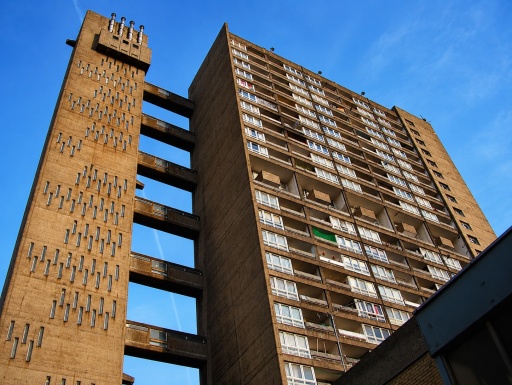
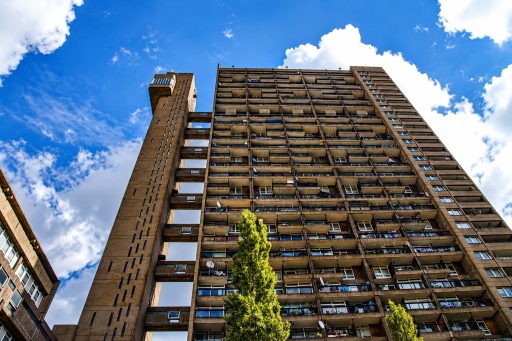
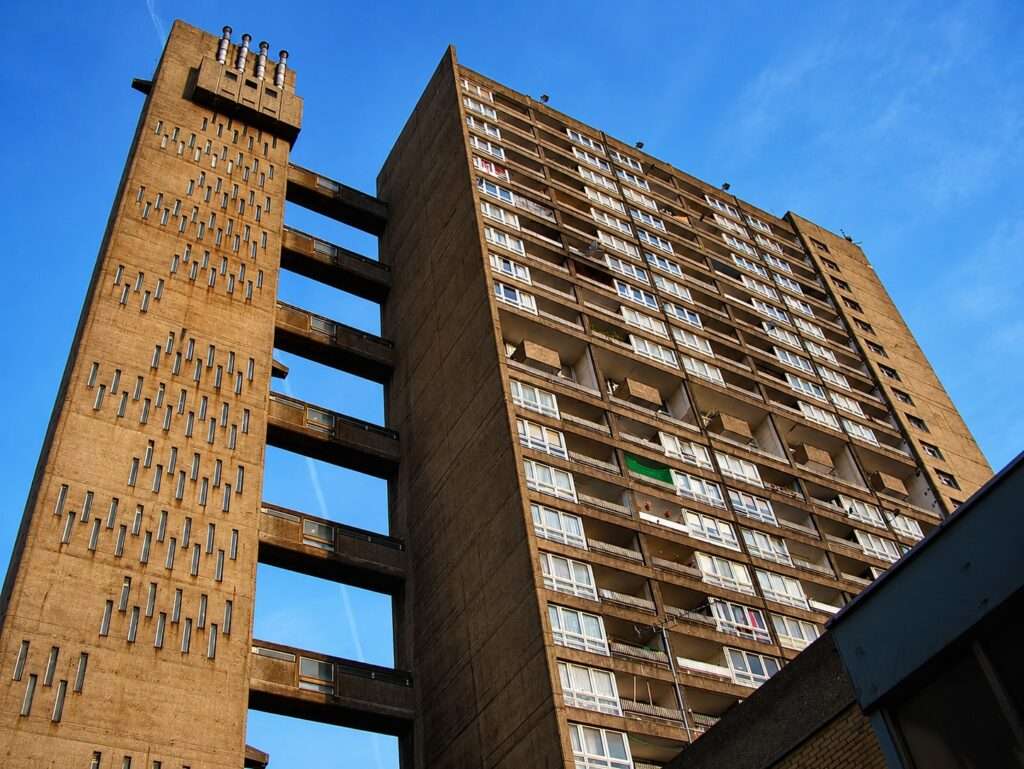
Designed by Ernő Goldfinger and completed in the early 1970s, it dominates the skyline of West London. The separate service tower, connected by narrow walkways, gives the whole building an extraordinary silhouette.
You could photograph it a hundred different ways and it would probably give you a hundred different moods.
Balfron Tower in Poplar has that same Goldfinger DNA. Raw, uncompromising and instantly recognisable.
And I have a particular memory of that roof.
Balfron Tower and World War Z
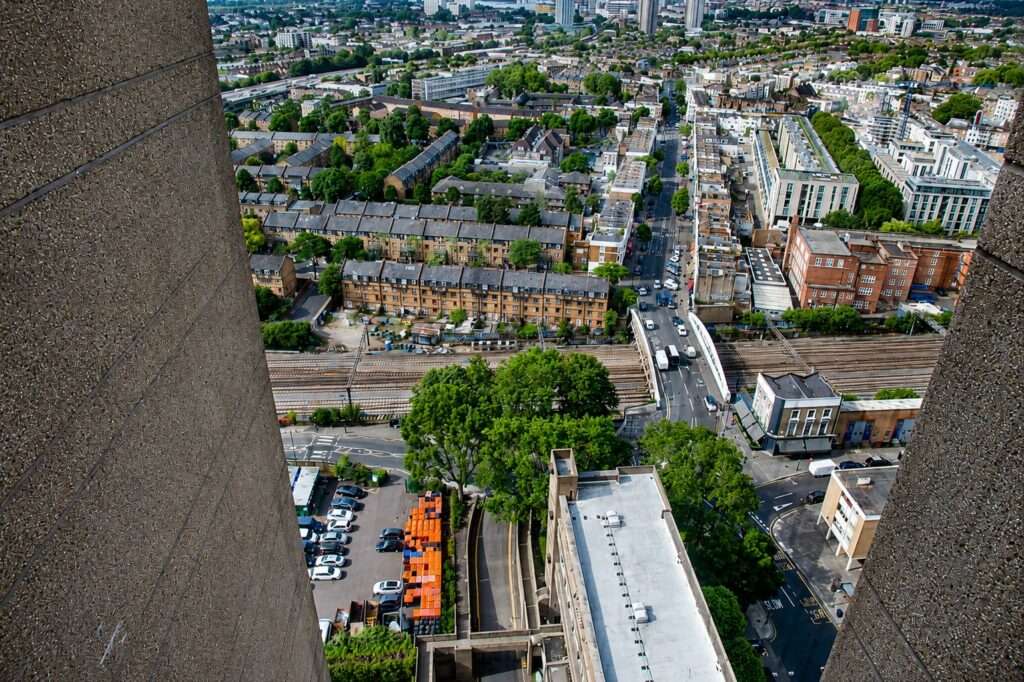
On World War Z, we all went up onto the roof of Balfron Tower in Poplar.
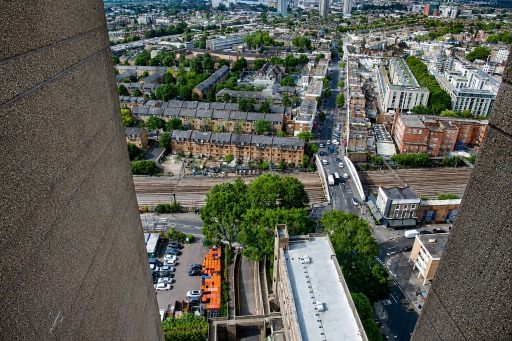
Standing up there, looking at the concrete, the height and the extraordinary views around the building, you could immediately understand why it worked for the sequence.
But we didn’t actually film the finished rooftop scene there.
Instead, the rooftop was rebuilt on Aldershot Parade Ground, around 100 feet up on a huge scaffold rig and surrounded by green screen. The New Jersey housing projects and the city beyond were then created in post-production.
That’s filmmaking for you.
You stand on the roof of a Goldfinger tower in Poplar, rebuild it 100 feet in the air in Aldershot, and end up in New Jersey.
Simple.
Alexandra Road Estate and Kingsman
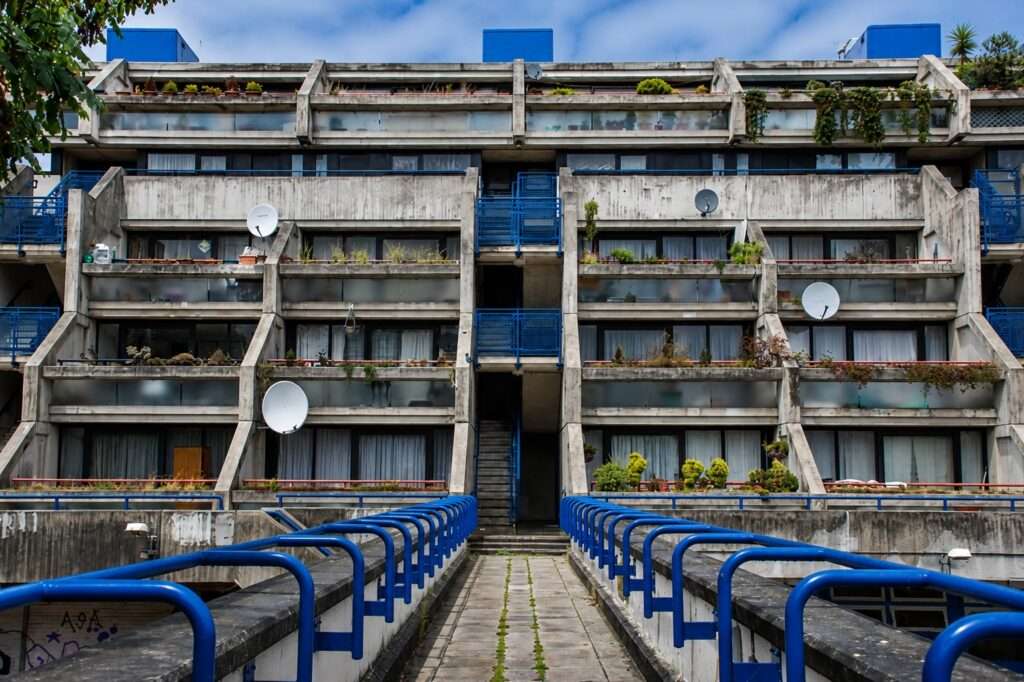
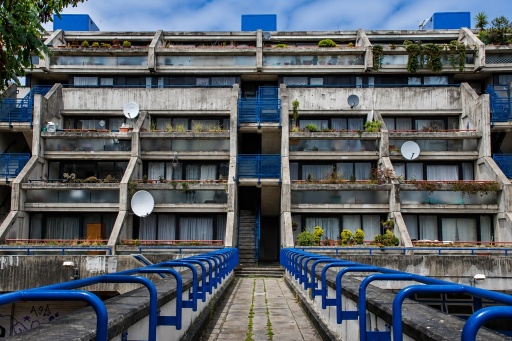
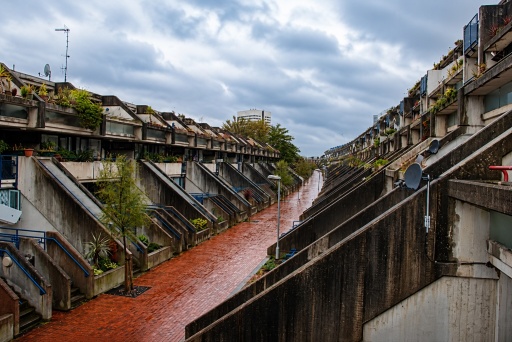
The Alexandra Road Estate in Camden is another favourite of mine and one of London’s most distinctive Brutalist filming locations.
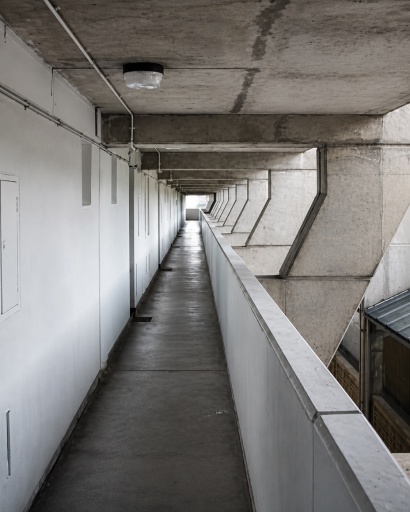
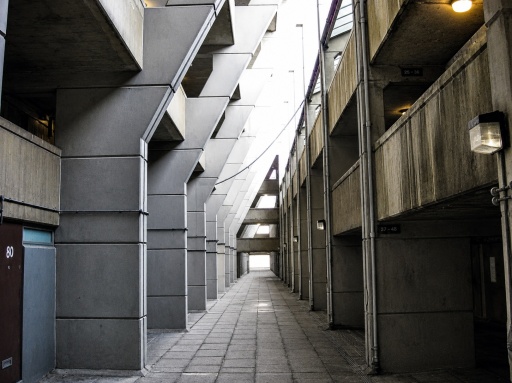
Designed by Neave Brown, it couldn’t be more different from the traditional idea of a London housing estate. Long sweeping terraces, stepped concrete structures and pedestrian walkways create these fantastic lines through the whole development.
It’s one of those locations where you can stand in one place, turn around, and immediately see another shot.
Which, as a location manager, is always a good sign.
We used Alexandra Road Estate for Kingsman: The Secret Service, filming the sequence where Eggsy is chased by his mum’s boyfriend’s cronies.
The chase starts right up at one of the top terrace apartments and works its way down through the estate, with Eggsy parkouring over walls, balconies and walkways as he heads towards the bottom.
It’s a perfect example of why Brutalist architecture works so well on camera.
The location almost gives you the action sequence. Levels, concrete walls, stairs, terraces and walkways, all stacked on top of each other.
Sometimes you find a location for a scene.
Sometimes the location helps create the scene.
The Brunswick Centre
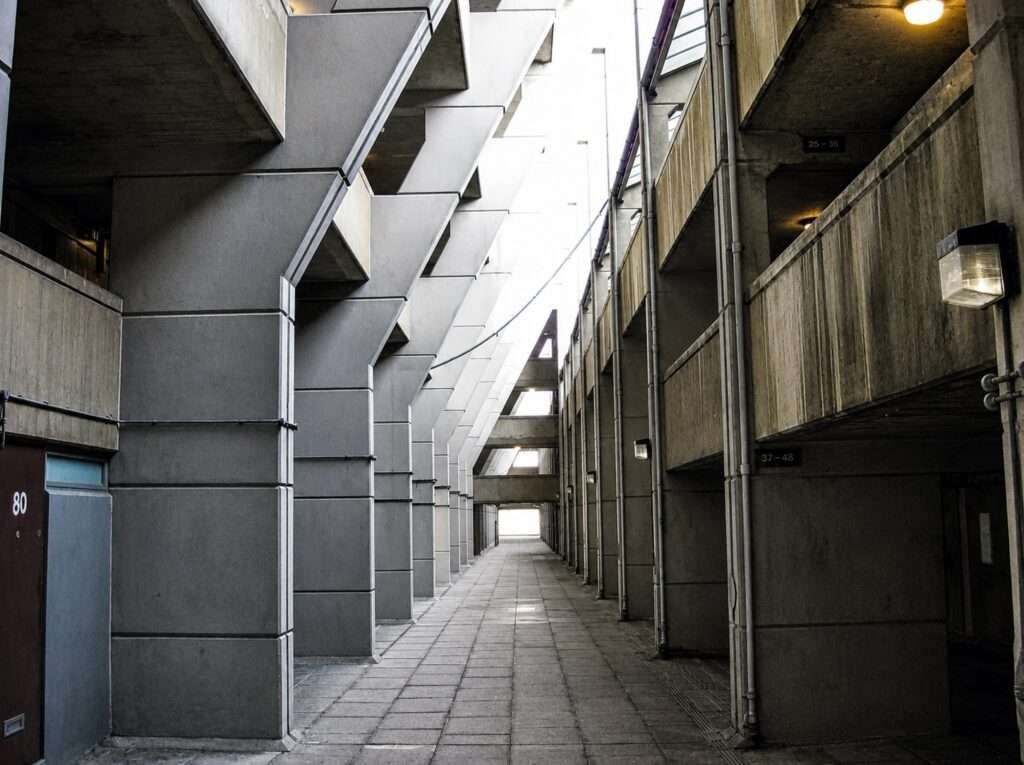
Then there’s the Brunswick Centre in Bloomsbury.
Again, concrete everywhere.
Originally designed by Patrick Hodgkinson, the building has this huge, almost monumental feel to it. Long terraces, repeating balconies and enormous concrete forms.
Today it’s full of shops, cafés and people going about their lives, which somehow makes the architecture even more interesting.
Brutalism with a Waitrose.
Perhaps not quite what the original architects had in mind.
The Brunswick Centre has also appeared as an Andor filming location. I didn’t work on the series, but it’s not difficult to see why the location team were drawn to it.
Strip away the shops, signs and everyday London clutter and the architecture already feels like another world.
The Barbican
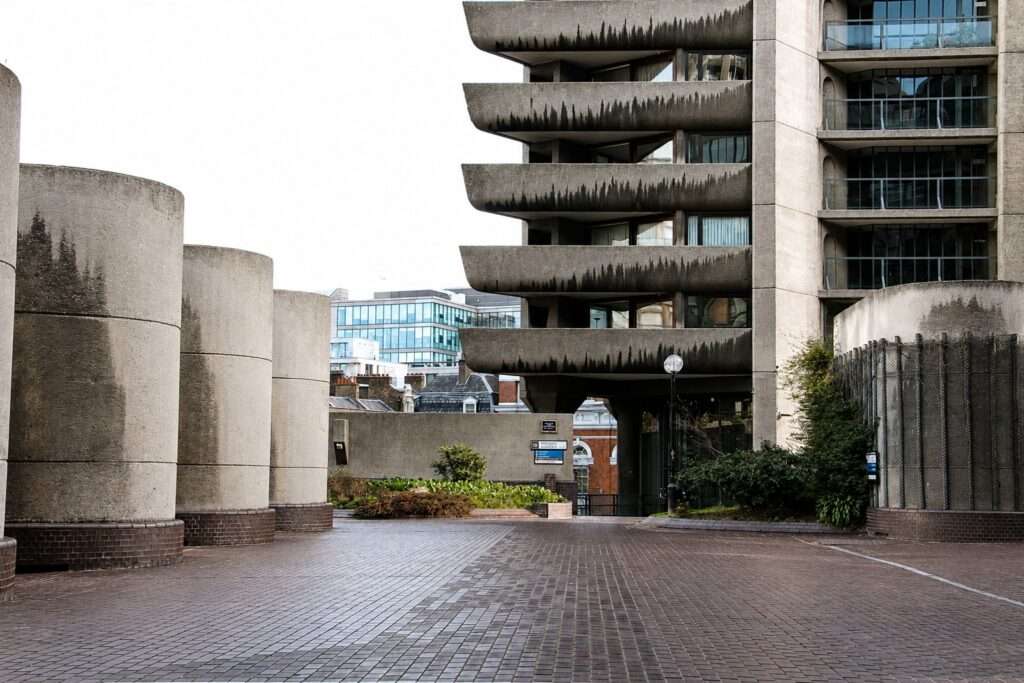
And of course, the Barbican.
You could probably spend a week scouting the Barbican and still find new angles.
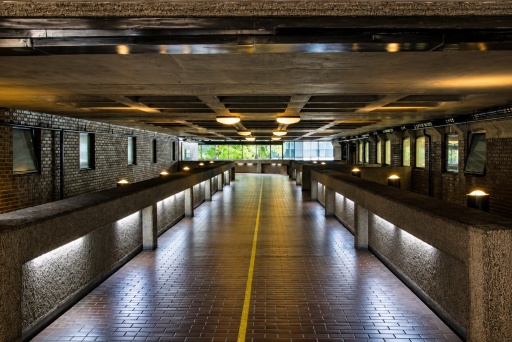
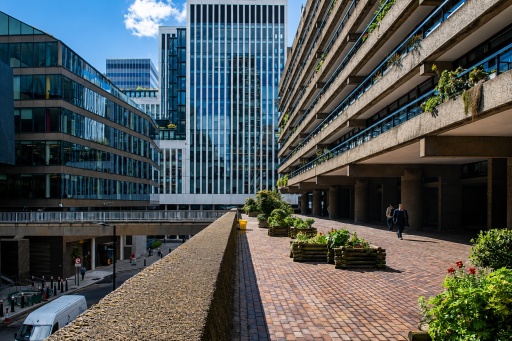
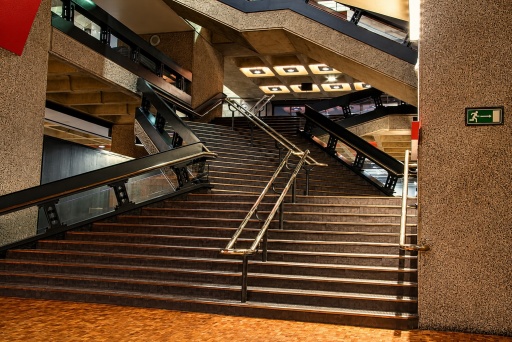
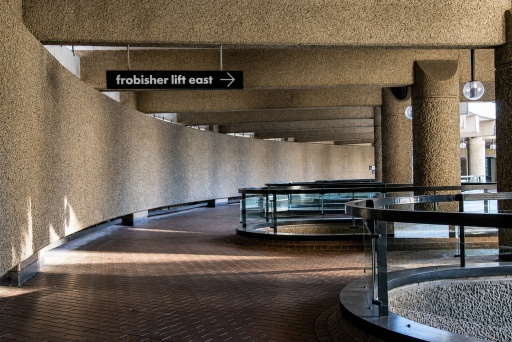
The towers, the raised walkways, the lakes, the arts centre, the endless concrete corridors. One minute it can feel beautifully calm and architectural; move the camera twenty feet and suddenly you’re in a dystopian thriller.
The Barbican has been used as an Andor filming location too, and again, I completely get it.
You don’t need to build the bones of a futuristic world.
They’re already there.
That’s the joy of Brutalism.
Why Brutalist Architecture Works on Camera
Locations are about more than finding a building that looks good.
They’re about shape, depth, scale, movement and what happens when you put a camera into a space.
Brutalist architecture already gives you so much of that.
Strong leading lines. Repetition. Huge changes in scale. Concrete that completely changes character depending on the weather and light.
On a bright summer day it can feel graphic and almost beautiful.
Add grey skies and rain and, well…
Welcome to the dystopian future.
No set build required.
After nearly 30 years scouting London filming locations, I still get excited when I find a great piece of concrete.
Ugly?
Maybe.
Brutal?
Definitely.
But that’s rather the point.