I have been lucky enough to scout most of the Canary Islands over the years for various film and television projects, and the Canary Islands offer some of the most diverse film locations in Europe.
What continually strikes me is just how much is there.
Sitting in the Atlantic just off the coast of North Africa, the Canary Islands offer an extraordinary variety of landscapes within a relatively small area: volcanic mountains, deserts, huge beaches, forests, ravines, dramatic coastlines, historic towns, modern cities and landscapes that can feel almost otherworldly.
From a Location Manager’s point of view, what makes them particularly interesting is that every island has its own character. You can move between landscapes that could double for Africa, South America, the Middle East, the Mediterranean or somewhere completely fictional, while remaining within Spain and only a few hours from mainland Europe and the UK.
For this piece I wanted to concentrate on four islands in particular: Tenerife, Fuerteventura, Gran Canaria and La Gomera.
They are relatively close to one another, but visually they could almost be different countries.
Tenerife
Tenerife is probably the most immediately diverse of the four.
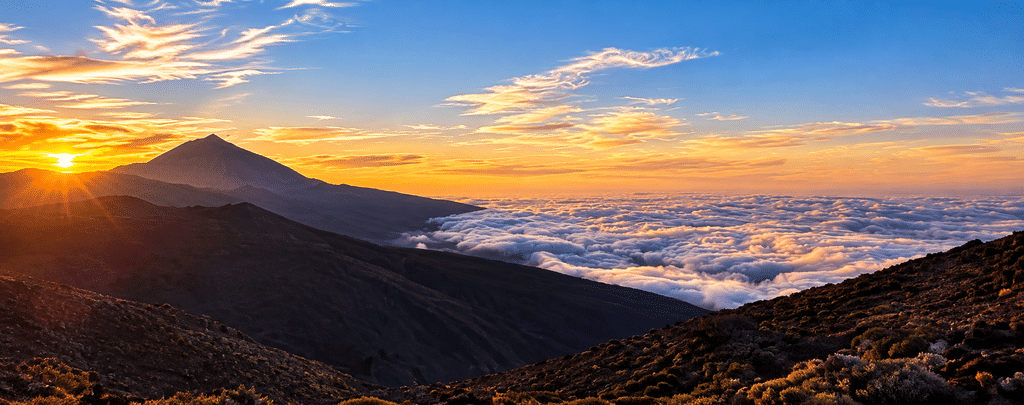
At its centre is Teide National Park, and parts of it really do feel like being on the moon. You drive through huge open volcanic landscapes, past lava fields and roadsides cut through black, red and rust-coloured volcanic rock.
There are stretches with almost no vegetation at all — just lava, stone and enormous skies.
For a filmmaker, that is incredibly useful. With the right angle, the landscape can feel prehistoric, extraterrestrial or completely removed from modern Europe. It is one of those places where simply driving through the landscape gives you a constant stream of potential shots.
And then, remarkably quickly, Tenerife changes again.
You can leave those barren volcanic landscapes and find yourself surrounded by pine forest, vegetation, mountain villages and cultivated land.
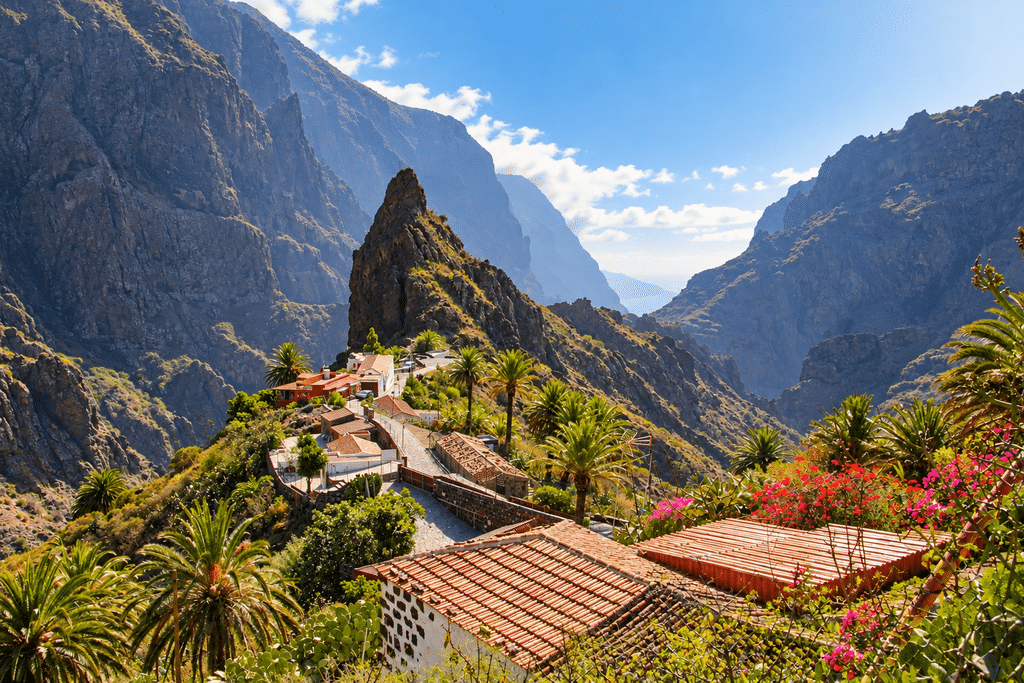
Masca is one of my favourite places on Tenerife and one of the most striking locations on the island.
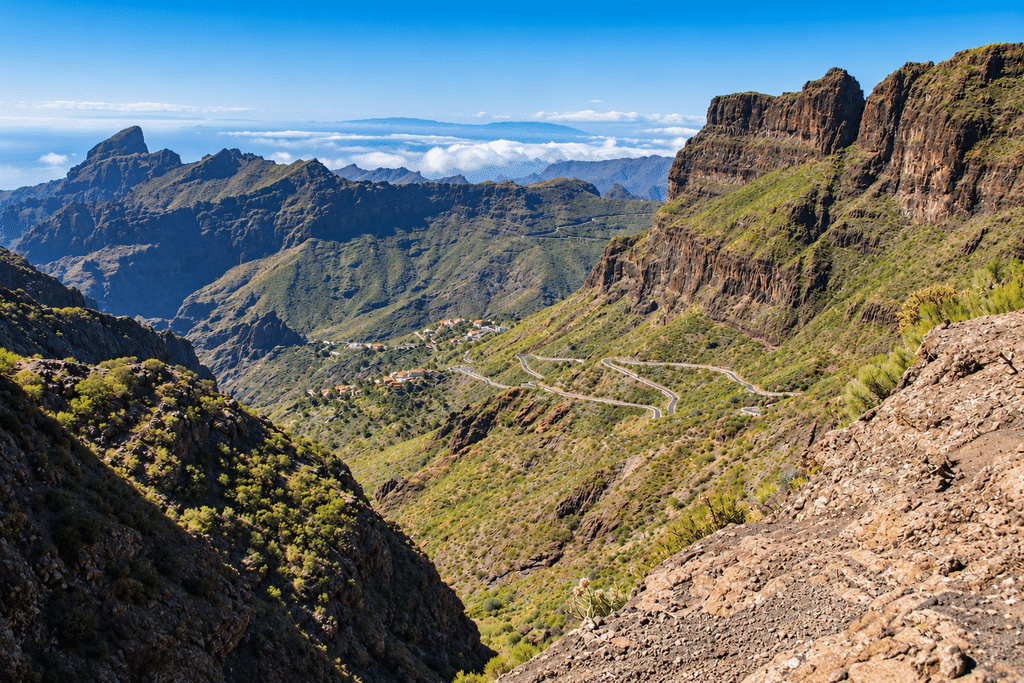
Set deep in the Teno Mountains, with its tiny village surrounded by enormous volcanic ridges and plunging ravines, it almost feels like a smaller Canary Islands version of Machu Picchu. The comparison is obviously visual rather than historical, but there is that same extraordinary sense of a settlement sitting within an immense mountain landscape.
Even the drive into Masca is spectacular, with the road twisting its way through the mountains before the village finally appears below.
Head towards the greener north of Tenerife and the landscape changes yet again.
Around the Orotava Valley you find banana plantations, with great banks of vivid green leaves growing out of the dark volcanic soil. Tenerife and the Canary Islands also have a long agricultural history, including tobacco cultivation, which adds another layer to a landscape that can already change dramatically within a relatively short drive.
That is what I find so extraordinary about Tenerife.
You can go from something that feels almost lunar, through pine forests and spectacular mountain scenery, past banana plantations and cultivated terraces, and eventually arrive back at the Atlantic coast.
From a film location point of view, that variety is enormously valuable.
Fuerteventura
Fuerteventura could hardly feel more different from Tenerife.
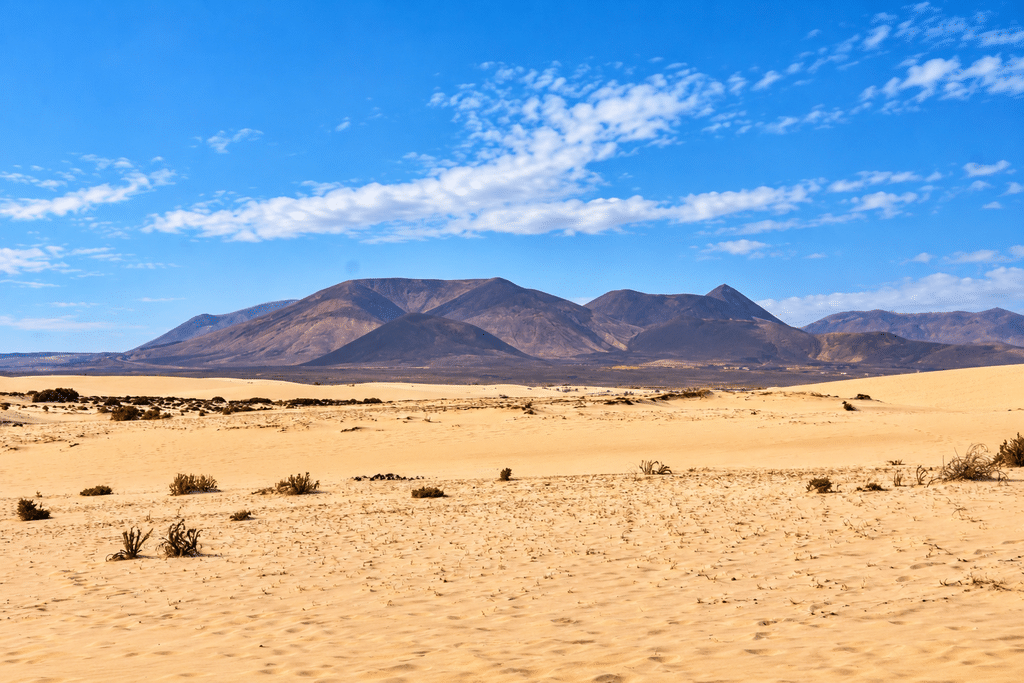
Where Tenerife rises dramatically into mountains and forests, Fuerteventura feels open, dry and almost endless.
Sand seems to be everywhere.
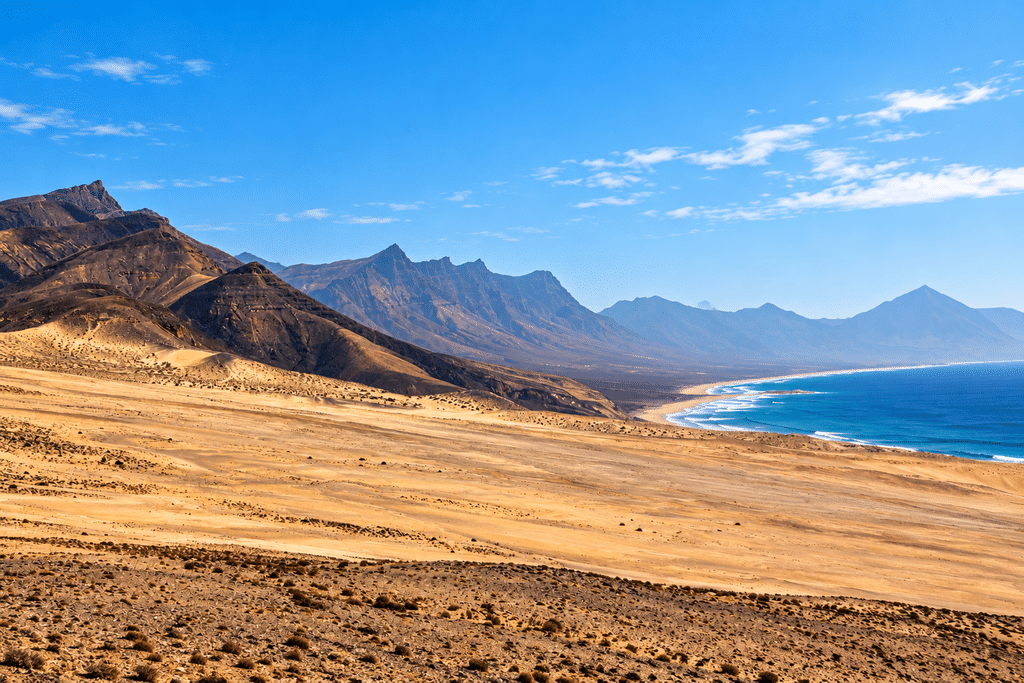
There are enormous beaches, dunes, pale dusty landscapes, barren mountains and long empty roads running through an island that can sometimes feel more North African than European.
And then there is the wind.
Fuerteventura is famously windy, something you certainly notice when scouting there, but visually it is an extraordinary place.
The beaches seem to go on forever.
The Corralejo dunes in the north give you great expanses of sand, but for me the island becomes even more interesting when you start exploring further away from the obvious areas.
The Jandía peninsula in the south has some spectacular landscapes, and Cofete in particular is extraordinary: a seemingly endless beach backed by an enormous mountain ridge.
There is a wonderful sense of scale and emptiness to Fuerteventura.
For filmmakers that openness can be incredibly useful. There are places where you can turn the camera through huge angles and see very little modern development at all — just sand, mountains, sea and sky.
It is almost the complete opposite of Tenerife, yet only a short flight away.
Of course, the emptier and more untouched somewhere looks on camera, the more important the practical side of location work becomes.
Access, unit bases, vehicle movement, wind, sun position, environmental restrictions and protection of the landscape all have to be considered alongside what the camera sees.
Finding somewhere beautiful is only ever the beginning.
Gran Canaria
Gran Canaria changes the landscape again.
It offers mountains, forests, volcanic ravines, beaches, villages, historic architecture and a substantial city in Las Palmas, but it even has its own little desert.
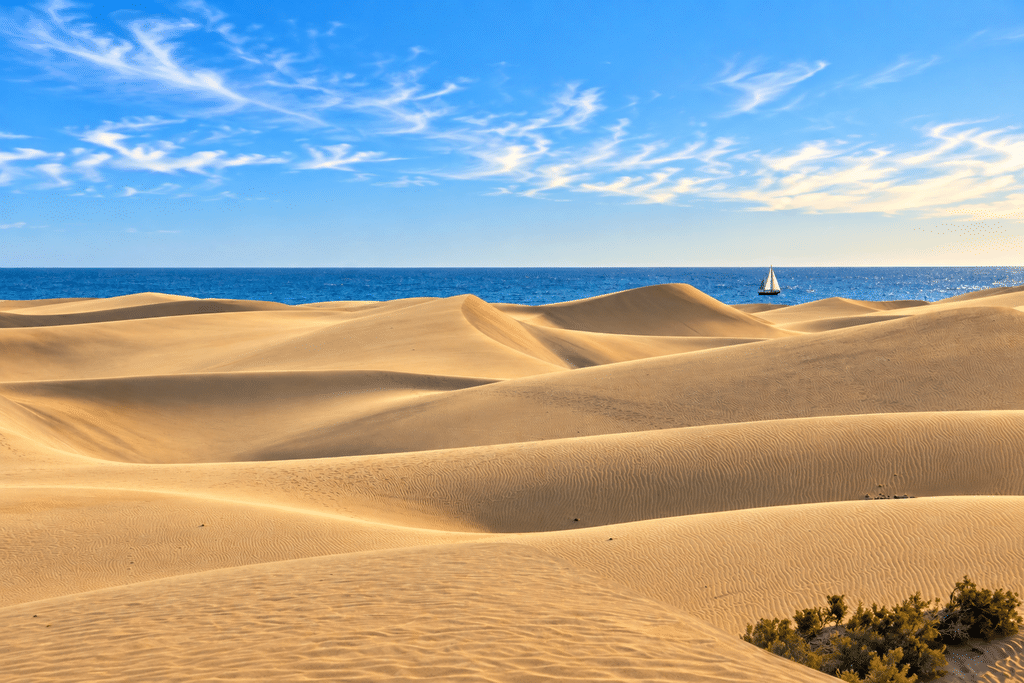
The Maspalomas dunes roll down towards the sea and can provide a surprisingly convincing desert landscape.
Admittedly, they are fairly modest when compared with the vast Sahara sitting across the water on the African mainland, but for a film production that almost misses the point.
You don’t necessarily need hundreds of miles of desert.
You need enough landscape, the right angles and the ability to keep the modern world out of frame.
From the right position, Maspalomas gives you sand, sky and a horizon that could potentially be almost anywhere.
Move into the centre of Gran Canaria and you get something completely different again: dramatic mountains, winding roads, deep ravines and villages tucked into the landscape.
Then you have Las Palmas, giving a production genuine city scale, streets, ports and architecture alongside all those natural landscapes.
That ability to combine city, countryside, mountains, coast and desert within one island is incredibly useful.
Gran Canaria is sometimes described as a continent in miniature and, from a Location Manager’s point of view, I can see exactly why.
La Gomera
And then there is La Gomera.
La Gomera feels completely different again.
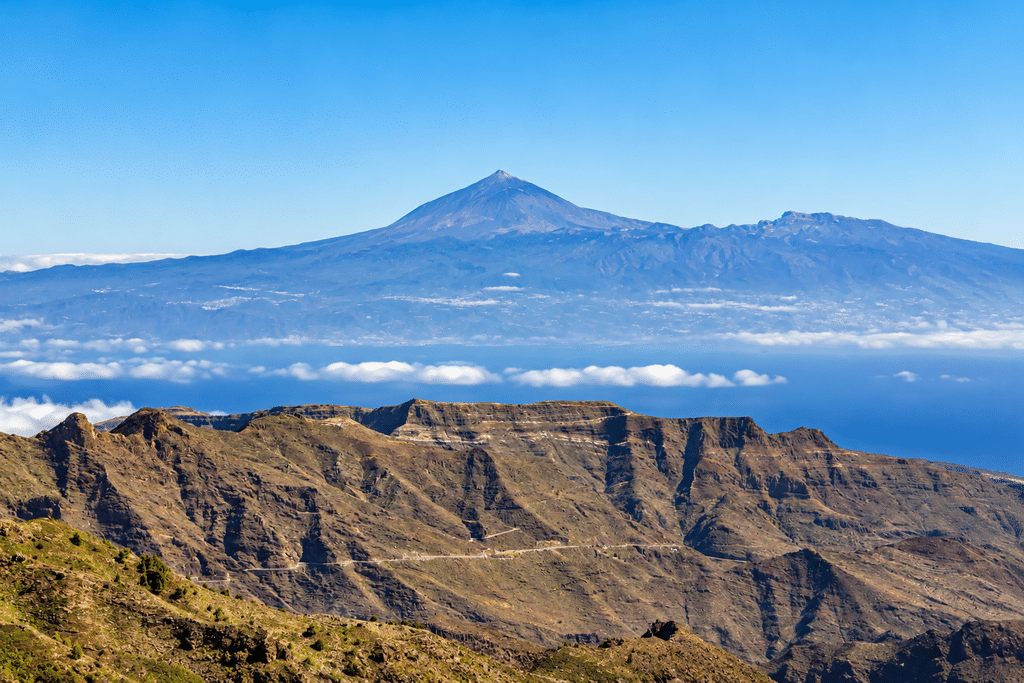
It is greener, steeper, wilder and in places considerably more untouched than the other islands.
Deep ravines radiate out from the centre and roads cling to huge mountain slopes. The scale can be extraordinary.
At its heart is Garajonay and its ancient laurel forest, where dense vegetation, mist and twisted trees can create an atmosphere that feels almost primeval.
For a filmmaker looking for ancient forest, remote mountain terrain or simply somewhere mysterious, La Gomera has enormous possibilities.
Its coastline is dramatic rather than resort-like, with cliffs, small beaches and isolated valleys running down towards the sea.
It is perhaps not always the easiest island logistically, but that is often the case with the best locations.
Mountain roads, crew movement, access and environmentally sensitive areas all need careful consideration, but those practical challenges are partly why places like La Gomera have retained their character.
And finding solutions to those problems is, after all, what the Locations Department does.
The Airline That Feels Like a Bus Service
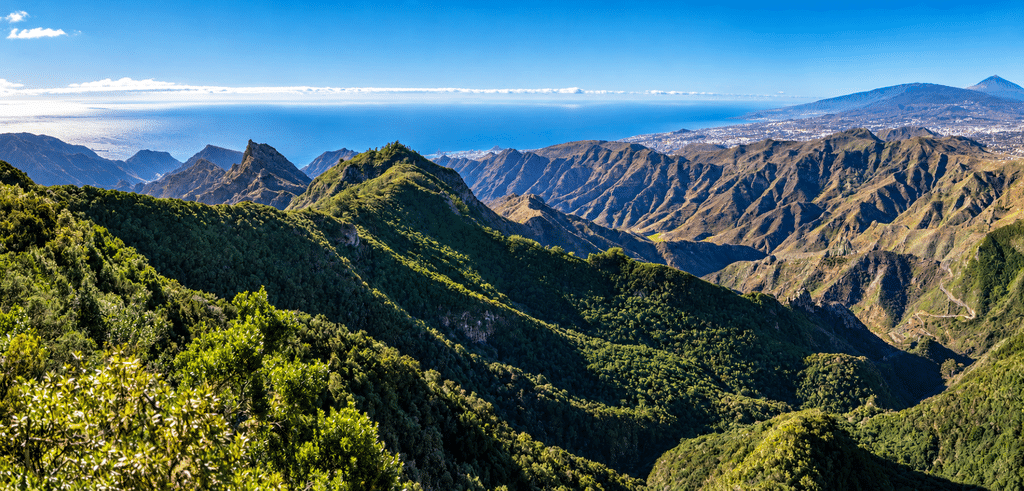
One of the things I have always loved about working around the Canary Islands is Binter, the local airline.
It almost feels like a bus service in the air.
There are flights constantly moving between the islands and some of the journeys are incredibly short. You seem to have barely taken off before you are preparing to land again.
When scouting, that connectivity is a huge advantage.
You can spend the morning looking at one type of landscape and, after a short flight, arrive somewhere that looks completely different.
For me that is part of the charm of scouting the Canaries — jumping on and off these little inter-island flights and moving between completely different worlds.
The Climate
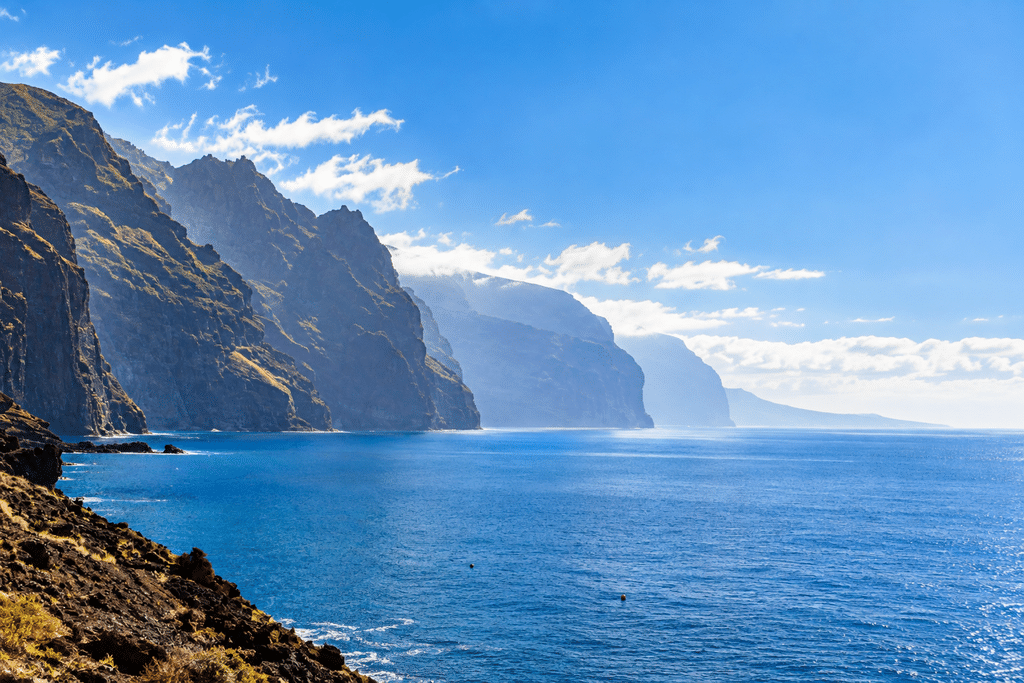
Then there is the weather.
The Canary Islands have an exceptionally consistent climate, with an average annual temperature of around 22°C.
Obviously altitude makes a difference — you certainly shouldn’t expect 22°C at the top of Teide — and individual islands have their own microclimates, but generally the temperatures remain remarkably mild throughout the year.
For film production, particularly exterior work, that consistency is extremely attractive.
Weather can destroy shooting schedules and cost productions enormous amounts of money. Nowhere can guarantee perfect conditions, but being somewhere with relatively stable temperatures, good levels of sunshine and long periods of usable weather is an obvious advantage.
It also means the islands can potentially work for productions throughout much of the year rather than having a very narrow shooting season.
It Really Is All There
When you put everything together, it becomes easy to understand why the Canary Islands have attracted so much international film and television production.
Tenerife gives you the almost lunar volcanic landscapes of Teide, the extraordinary mountains and ravines around Masca, forests, agriculture, banana plantations and dramatic coastline.
Fuerteventura gives you sand, huge beaches, barren landscapes, empty roads and extraordinary scale.
Gran Canaria gives you mountains, city environments, villages, coastline and even its own desert landscape.
And La Gomera offers something greener, wilder and more mysterious, with deep ravines and ancient forest.
You can move between those completely different environments remarkably easily, there is good production infrastructure, a dependable climate and, importantly, the Canary Islands also offer a very attractive financial incentive for filmmakers.
Qualifying international productions can currently benefit from a tax rebate of up to 54% on eligible expenditure, subject of course to the required production spend and qualifying criteria.
So yes, from a filmmaking point of view, it really is all there.
I have scouted many countries over the years, but there are relatively few places where you can find this much visual diversity packed into such a small geographical area.
And sometimes the greatest trick a film location can perform is making an audience believe they are somewhere else entirely.
The Canary Islands are exceptionally good at doing exactly that.